Pilgrimage to the Pale: Five American Towns Where the Fog Never Quite Lifts
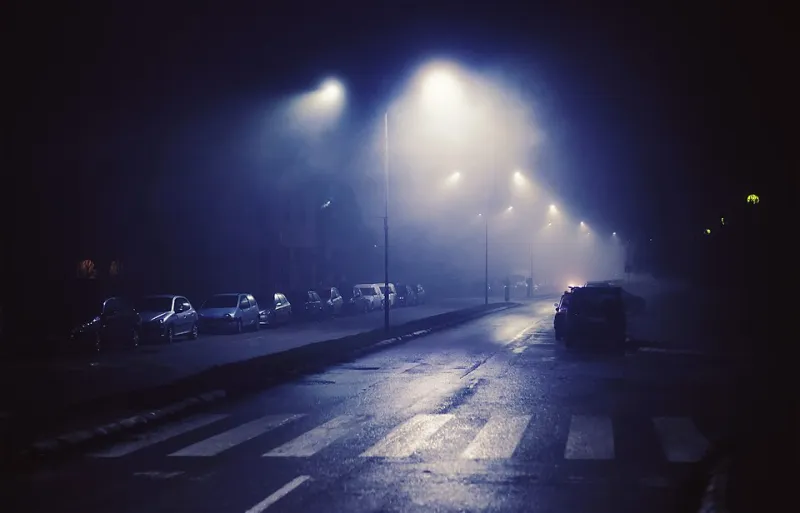
Photo: dejankrsmanovic, CC BY 2.0, via Wikimedia Commons
The gothic novel, as a form, was born in Europe — all crumbling abbeys and brooding counts — but it emigrated early, and it thrived here. Something about the American landscape, with its vast forests, fog-choked coastlines, and towns built atop older, darker histories, proved hospitable ground. The five places below are not theme-park haunts. They are working towns where the atmosphere is simply part of the municipal infrastructure, and where the local legends have documentation to match the mood.
Sleepy Hollow, New York
Washington Irving didn't invent the Headless Horseman so much as transcribe him. The real Sleepy Hollow, along the Hudson River roughly twenty-five miles north of Manhattan, still carries the contours of his 1820 tale: the old Dutch church, the wooden bridge, the narrow roads where the tree canopy closes overhead like a lid. The Sleepy Hollow Cemetery — Irving's own resting place — is open to visitors, and on October evenings the whole valley seems to lean into its most famous resident legend. It remains the rare American town where a ghost story is, functionally, the local economy.
St. Augustine, Florida
The oldest continuously inhabited European settlement in the United States wears its four and a half centuries lightly — too lightly, some say. Castillo de San Marcos, the coquina fort on Matanzas Bay, has walls that legend insists absorbed the screams of prisoners; the nearby lighthouse has accumulated enough spectral lore to anchor an entire episode of television's ghost-hunting genre. Walk the narrow colonial streets after the tour buses leave and the gothic arithmetic is simple: old stone, humid dark, and a lot of history nobody wrote down.
Bar Harbor and the Mount Desert Coast, Maine
Maine's coastline is the closest thing America has to Cornish moor country — a fact Stephen King has spent fifty years exploiting from his desk in Bangor. The fog here is not a weather event; it is a condition, rolling in off the Atlantic and erasing the coastline so thoroughly that the lighthouses sound less like navigation aids and more like warnings. Local lore along the island communities includes shipwreck ghosts, disappearances on the carriage roads, and the particular melancholy of Gilded Age summer cottages that have stood empty for generations. It is a landscape that seems to want stories.
New Orleans, Louisiana
No list of this kind is complete without the Crescent City, though calling New Orleans a "town" undersells a city that functions as America's permanent gothic anthology. Above-ground tombs in St. Louis Cemetery, the venerated dead of Marie Laveau, the unsolved darkness of the Lalaurie Mansion on Royal Street — the legends here are not folklore layered over a placid present. They are entangled with documented history, which makes them heavier. The city's humid air, iron balconies, and gaslight-adjacent streets do the rest.
Centralia, Pennsylvania
The strangest entry on this list is a town that technically no longer exists. Since 1962, a coal seam beneath Centralia has burned, unhindered, transforming a once-ordinary Pennsylvania mining borough into a landscape of cracked roads, venting steam, and abandoned grids. The fire is expected to burn for another century or more. Graffiti Highway — the stretch of abandoned asphalt once covered in visitor messages — has been buried, but the town itself remains, a genuine American ruin where the apocalypse was geological rather than supernatural. Gothic novelists could not invent it; the earth did.
Why the Ground Remembers
What unites these places is not ghosts, exactly. It is the sense — common to all good gothic settings — that the past has not finished with the present. American soil breeds this feeling easily: a young nation with very old wounds, towns built over mines, burial grounds, battlefields, and drowned coastlines. Visit any of them with a notebook, and you may find the stories follow you home. That is, of course, the traditional way these things begin.