The Unheard Scream: How Silence Becomes a Weapon on the Page
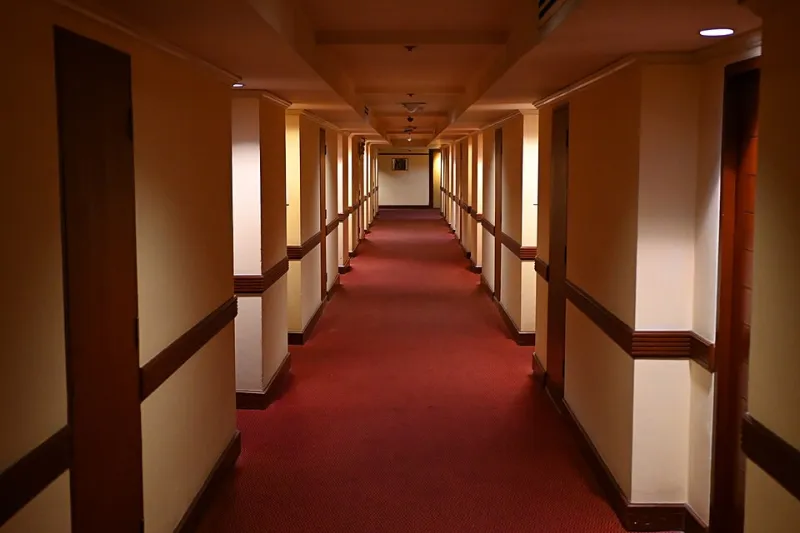
Photo: PattayaPatrol, CC BY-SA 4.0, via Wikimedia Commons
There is a moment in nearly every memorable horror story that contains, technically speaking, nothing at all. The house has stopped creaking. The wind has died. The character — and by extension the reader — is suspended in a pocket of absolute quiet, waiting for something to break it. That waiting is not the absence of horror. It is the horror.
Silence is the most misunderstood instrument in the horror writer's kit. Amateur manuscripts tend to reach for noise: the scream, the crash, the sudden bark of a dog. But seasoned practitioners understand that sound, once delivered, ends the tension. Silence prolongs it. It hands the reader a blank page of the imagination and lets them fill it with something worse than anything you could describe.
The Grammar of Nothing
Consider how Shirley Jackson builds the opening of The Haunting of Hill House. Nothing screams. Nothing lurches. Instead, we get a house that is quiet in a way that feels watchful — a silence with posture. Jackson understood that in American gothic fiction, quiet is never neutral. It is a held breath. It implies that something has been said, or done, or seen, and that everything is now pretending otherwise.
This is the grammar of nothing: silence in horror is not an empty set but a loaded one. When your character notices that the crickets have stopped, you have told the reader three things at once. First, that there was sound. Second, that it has ceased. Third — and this is the payload — that whatever caused the cessation is still present. The reader does the final calculation themselves, and calculations readers perform on their own behalf are always more convincing than the ones you perform for them.
Dead Air and the Digital Campfire
The technique scales from the literary to the lurid. Modern creepypasta — the digital campfire story, passed hand to hand across forums and subreddits — relies heavily on the same mechanism. The best of these stories rarely describe the monster in full. Instead, they describe the quiet around the monster: the neighbor who stopped speaking, the phone call where nobody answers but nobody hangs up, the security footage where nothing moves for six hours. The horror lives in the gaps the narrator cannot explain and the reader cannot stop explaining to themselves.
There is a lesson here for anyone drafting a haunted house story in a notebook at two in the morning: specificity of absence beats vagueness of presence. "It was dark and scary" evaporates. "The refrigerator hum stopped at 3:14 a.m., and she realized she had never once heard it stop before" lingers.
Pacing the Void
Silence also functions as structure. In a novel or long-form story, quiet passages act as compression — the reader's pulse doesn't ratchet upward in a straight line, but in waves, and the troughs are what make the crests land. A jump scare without preceding stillness is a door slamming in a windstorm: noise without meaning. The same scare, positioned after a page of deliberate hush, becomes an event.
Practically, this means learning to write the pause. Let a paragraph end on a sensory withholding — the hand on the doorknob, the breath drawn, the light switched off. Let the next section begin a beat late, in medias dread. American readers raised on Stephen King know this rhythm intimately; King's slow-building small-town dread in Salem's Lot is mostly a study in what towns do and don't say to each other.
What We Don't Hear
The final argument for silence is philosophical. Horror works because it stages the limits of human knowledge. Noise confirms: something is there, it has a shape, it can be named. Silence denies confirmation. It keeps the threat in the epistemological fog where it is strongest. The moment you hear the footsteps, you know they belong to feet. While you hear nothing, they could belong to anything.
So the next time a draft feels flat, resist the urge to add sound. Try subtracting it. Stop the clock. Kill the crickets. Make the character notice that the house has gone quiet in a way houses never do — and then, whatever you do, don't tell the reader why.