Atrium of the Afternoon: Reading the Dead Mall as a Suburban Afterlife
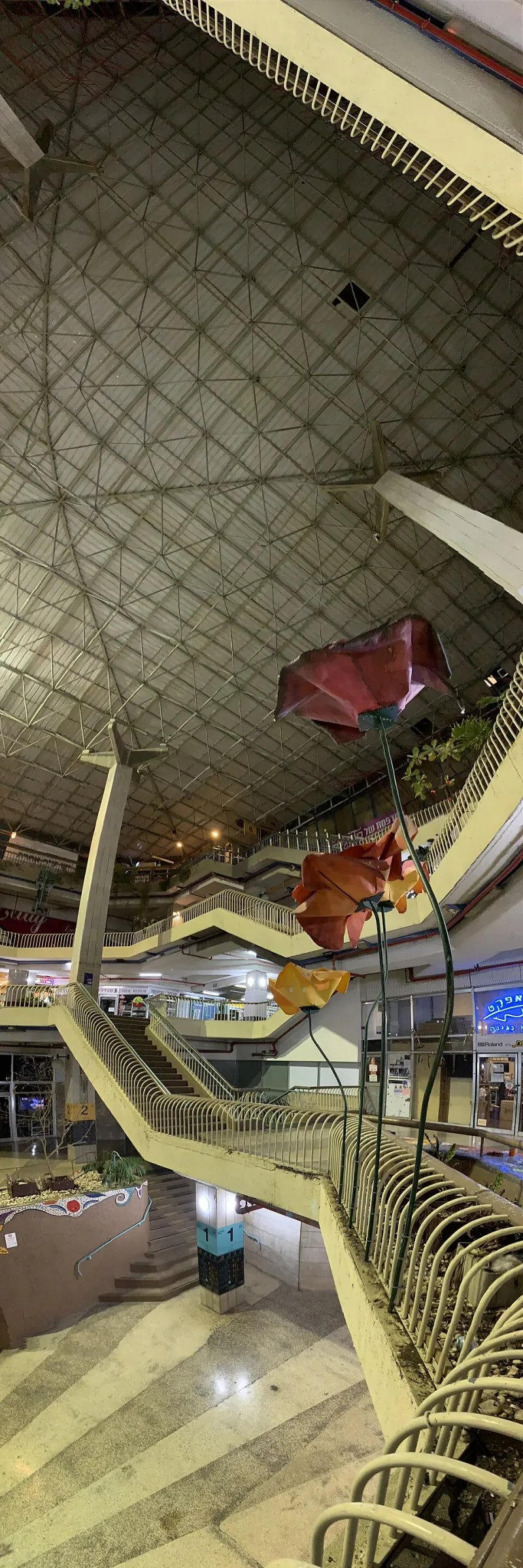
Photo: Yitzilitt, CC BY-SA 4.0, via Wikimedia Commons
The dead mall is not a ruin in the classical sense. There are no broken columns, no vines climbing a fallen pediment. There is a skylight. There is a fountain. There is a directory with a red dot that says YOU ARE HERE, though the map has not been true for years. The American shopping center is a modern ruin, and it is best read the way one reads a cathedral: slowly, on foot, with attention to what the architecture expects.
The Fountain Without Water
Begin at the center court. Every mall has one, and every one was built around a fountain. The fountain was the heart of the place, a small civic lie that said this was a town square and not a machine for selling. When the mall dies, the fountain is the first thing to go quiet. The tiles remain. The coins remain, sometimes. The water does not.
For the writer, the dry fountain is a perfect object. It is a basin that has lost its function. It is a wishing well that no longer grants anything. Put a character beside it and let them remember the sound of water. The silence will do the rest.
Escalators That Ascend to Nothing
The escalator is the mall's most theatrical machine. It moves people upward for no reason except to sell them something on the second floor. When the stores close, the escalator becomes a staircase that has forgotten its purpose. It still rises. It still falls. It goes nowhere.
Write the escalator as a stalled ritual. A character can stand at the bottom and watch the steps climb into the dark of the upper level. The motion is steady and useless. That is the horror of retail architecture: it was designed to keep you moving, and now it keeps moving without you.
The Food Court as a Communal Wake
The food court is where the mall was most honest. People sat together and ate food that was not good for them and watched other people do the same. It was a communal table with a hundred chairs. When the mall dies, the food court becomes a wake without a body. The tables are still bolted to the floor. The chairs are still arranged. The smells are gone.
Use the food court to gather your characters. It is a place where people confess things over trays. The lighting is fluorescent and unforgiving. The silence is too big. A character can say something terrible there and the room will absorb it without comment.
Mannequins and the Discipline of Stillness
The mannequins are the mall's congregation. They stand in windows, or they lie in piles behind security gates, or they wait in the back rooms with their plastic arms crossed. They are not scary because they move. They are scary because they are patient. They have been standing in the same pose for years.
Do not make the mannequins move too soon. Let the reader notice them first. Let the character walk past a window and feel that the mannequin was facing the other way. Do not confirm it. The mall is a place of stalled time, and the mannequins are its clocks.
A Labyrinth of Stalled Time
The dead mall is a labyrinth, but not a maze. There is no minotaur. There is only the repetition of storefronts, the same gray tile, the same security gate, the same empty planter. The labyrinth is made of sameness. That is what makes it feel like an afterlife: it is a place that never got the memo that it ended.
Walk it as a pilgrim would. Note the anchor stores at either end, the dark glass, the parking lot that goes on forever. Note the car that has been parked in the same spot for weeks. Note the sound of your own footsteps. The mall will not give you a monster. It will give you the feeling that the afternoon has not moved.
Practical Dread, No Jump Scares
The temptation with a dead mall is to fill it with noise. A crash in a vacant store. A light that flickers. A figure at the end of the corridor. Resist. The mall is already a machine for quiet dread. Your job is to keep it quiet.
Use the architecture. The skylight that lets in a gray rectangle of daylight. The escalator that hums. The fountain that does not. The directory that is wrong. Let the reader do the work of imagining what is behind the security gate. The dead mall is a suburban afterlife, and the dead do not jump out at you. They wait.
That is the pilgrimage. You go to the dead mall not to be startled but to be slowed. You go to remember that a place can be full of people and still be empty. You go to stand in the atrium of the afternoon and listen to the echo of a fountain that is no longer there.