The Glass Above the Pines: Fire Lookouts and the Uneasy Art of Being Watched
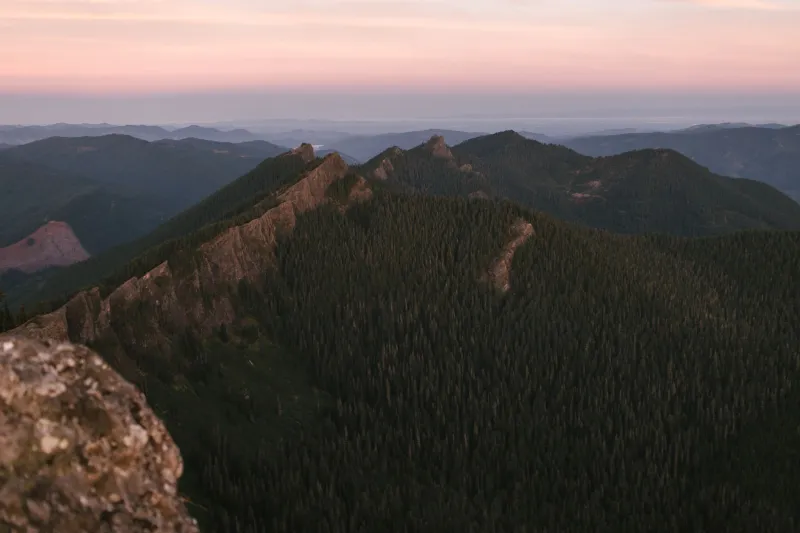
There is a particular silence that begins about forty feet above the forest floor. It is not the hush of a library or the pause before a storm; it is the silence of a room built to listen. In the American West and along the ridgelines of Appalachia, fire lookout towers still stand in that silence—small glassed cabins on steel or timber legs, reached by stairs that ring underfoot like a warning bell. They were erected for a practical purpose: to see smoke early, to report it, to protect the trees below. Yet any structure that asks a person to watch an empty wilderness for hours will eventually acquire a second purpose. It becomes a stage for the old unease of being watched in return.
The Architecture of Attention
A lookout is a machine for narrowing the world. The cab is small, often no larger than a bedroom, and its windows wrap the occupant in a continuous pane of sky and treetop. A map board, an Osborne fire finder, a radio, a logbook: these are the instruments of a vocation that is half ranger and half monk. The labor is not dramatic. It is the labor of attention—scanning, noting, waiting, and scanning again.
That rhythm is what makes the tower such fertile ground for atmospheric horror. Isolation is only the beginning. The deeper dread lies in the asymmetry of the gaze. The watcher is elevated, exposed, and legible from below; the forest is low, dense, and unreadable. A figure on a trail can see the tower long before the lookout sees the figure. At dusk, when the glass turns reflective, the watcher becomes the watched—his own face floating over the trees, a stranger in the pane.
Where the West Keeps Its Vigil
In the western states, lookouts are often relics of the early twentieth century, when vast timber stands and new settlement demanded early warning. Many were staffed by men and women who spent whole summers alone, supplied by pack mule or helicopter, their nearest neighbor a ridge away. The cabins remain: some restored and rentable, some weathered to gray boards, some reduced to a concrete footing and a view.
Desolation Peak in Washington's North Cascades holds a literary shadow as well as a geographic one. Jack Kerouac spent the summer of 1956 there as a fire lookout, an experience that fed his later writing. Visitors who make the steep climb describe a place that feels less abandoned than occupied by aftermath—as if the cabin still holds the residue of a long, solitary argument with the self. That is history, not haunting, but the two are often neighbors in the high country.
Appalachia offers a different register. Towers such as Shuckstack in the Great Smoky Mountains and Mount Cammerer in Tennessee sit on ridges where cloud and hardwood forest meet. The climate is wetter, the views shorter, the sense of enclosure stronger. A lookout in the southern mountains is less a panopticon than a blind: a small aperture in a breathing green wall. When fog rises through the coves, the tower can feel like a lantern left on in an empty house.
Towers with Reputations
Folklore gathers around certain structures the way mist gathers in low ground. The following lookouts are not offered as proof of anything supernatural; they are places where visitors, volunteers, and locals have long traded accounts of unease. Treat the stories as part of the landscape.
Devil's Head Lookout, Colorado. A stone-and-timber tower reached by a steep stair, Devil's Head carries a name that invites narrative. Hikers report the peculiar sensation of being followed on the ascent and of finding the cab colder than the air outside. The view is immense; the stairs, when descending, seem longer than they were.
Shuckstack, North Carolina and Tennessee. The old tower in the Smokies has a skeletal frame and a reputation for voices carried on wind that does not otherwise move the trees. Rangers have long noted how sound behaves strangely on the ridge—an acoustical fact that does nothing to quiet the stories.
Mount Cammerer, Tennessee. A stone lookout at the end of a long ridge trail, Cammerer is beloved by day hikers and avoided by some after dark. Accounts often mention a light in the windows when the building is known to be locked and empty.
Desolation Peak, Washington. Kerouac's tower draws literary pilgrims. The most common report is not a apparition but a mood: the conviction, arriving near sunset, that the solitude has been interrupted by something patient.
Sierra Buttes, California. The highest lookout in the Sierra Nevada, reached by a staircase pinned to rock, offers a panorama that can turn abruptly claustrophobic when clouds close in. Visitors describe the sensation of being examined from the treeline—a classic tower anxiety, and one the setting rewards.
The Landscape as Antagonist
For writers drawn to the gothic, the lookout is a useful instrument because it reverses the usual geography of fear. Haunted houses press in from the walls; a tower presses out from the glass. The threat is not enclosure but exposure. The protagonist is safe from nothing because she can see everything—and everything can see her.
Craft notes follow from that premise. First, make the duty concrete: the radio check at noon, the weather log, the precise language of a smoke report. Horror thrives on procedural detail. Second, let the landscape keep its own schedule. Weather in the high country is indifferent and sudden; fog, wind, and lightning do not care about the plot. Third, resist the urge to explain the watcher. A figure at the treeline is more effective when the lookout cannot decide whether it is a hiker, a bear, or a reflection. Fourth, use the descent. The climb is anticipation; the stairs down, with the cab at your back, are where the story tightens.
Going Up, Coming Down
Many lookouts are available to rent through public land agencies, and volunteer staffing programs still exist. Those who go should go with respect: pack out what they bring, observe fire restrictions, and remember that a tower is a working remnant, not a set. The point of dark travel is not to manufacture dread but to notice the dread already present in a place—the way a pane of glass at dusk holds two worlds at once, the forest outside and the watcher within.
Stand on the catwalk at last light and the old bargain of the lookout becomes clear. You are there to watch for fire. The forest, patient and unlit, is under no such obligation. It only watches back.