Domestic Hauntings: The Everyday Objects That Learn to Watch Us Back
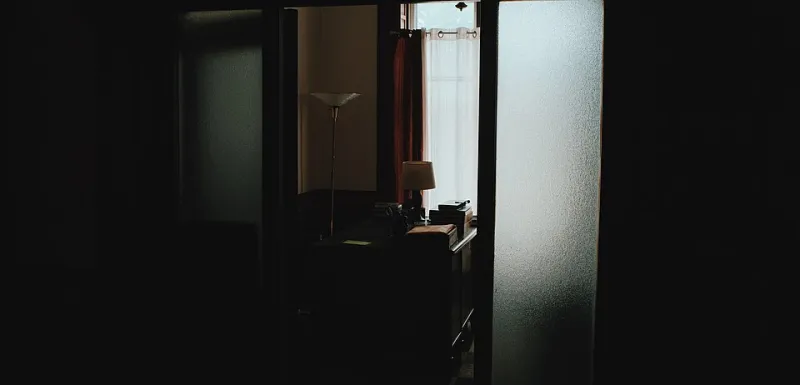
Photo: Stephen Caserta caserta, CC0, via Wikimedia Commons
Every traveler knows the thrill of the obviously haunted: the crumbling asylum, the lighthouse with a plaque, the colonial inn that advertises its ghost in the brochure. But the seasoned dark traveler learns something stranger — that the most reliable haunting in America doesn't require a ticket. It waits at home, in the hallway, after everyone else has gone to bed. The house you live in has been rehearsing.
The Mirror: A Room You Cannot Enter
Start in the bathroom, because everyone does. The mirror is the oldest domestic traitor in literature — a doorway shaped like a window, an audience of one that blinks when you don't. Folklore formalized the fear (cover the mirrors when someone dies; never say the name three times), but writers perfected it. Shirley Jackson understood that a reflection is a self you cannot interrogate, and contemporary dark fiction has run with the idea: the glass that lags a half-second, the reflection that finishes a smile you haven't started.
Travelers can test the theory anywhere old glass survives. The antique mirrors of Savannah's bed-and-breakfasts, the Victorian vanities of Cape May, New Jersey — stand before one at midnight and notice how the reflection becomes a stranger wearing your posture.
The Rocking Chair: Motion Without a Mover
No object in American letters carries a grudge quite like a rocking chair. Its horror is mechanical and intimate at once: it is built to move, so it needs no ghost to justify motion — only a reason to have stopped. Jackson's Hill House used the device with chilling economy; a chair rocking in an empty nursery tells the reader everything without a single adjective.
You can sit with this dread in person. Appalachian heritage museums and antebellum house tours across the South keep their porches furnished with them, and no docent has ever explained why guests photograph the empty ones most.
The Hall Closet: A Door That Owes You Nothing
The closet is the only door in the house that is always slightly wrong — too shallow to be a room, too dark to be empty. It is the home's held breath. Writers love it because the closet weaponizes architecture: a door implies a space, and an unlit space implies occupancy. Children sense it first, which is why so many horror stories begin with a child who won't sleep.
The Staircase and the Doorbell: The House Speaks
Two final objects deserve their dread. The staircase, especially the one that creaks on the seventh step, is a narrative instrument — it announces movement, and movement at 3 a.m. demands an owner. And the doorbell, that small electric throat, has never once in fiction announced good news after midnight.
The Argument for Staying Home
Here is the closing thought for the dark traveler: the pilgrimage matters — the fog-bound town, the pale lighthouse, the haunted inn — but it is practice, not arrival. Jackson's great lesson, and the lesson of every writer who turned a kitchen into a crypt, is that horror does not live in remote places. It lives in what we touch every day, waiting only for the lights to go out and the familiar to turn its face around.
The scariest destination, it turns out, is the one with your address on it.