Seven Poems for the Small Hours: A Nocturne Reader's Companion

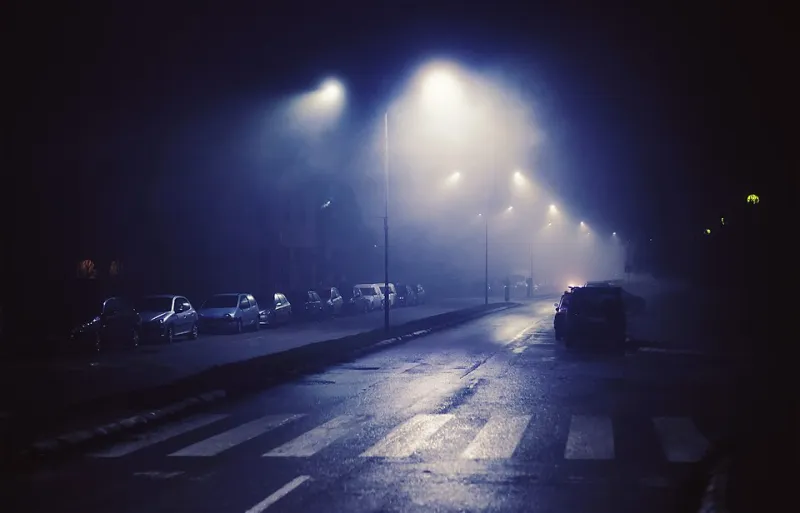
Photo: Matt Whitman, Bureau of Land Management Alaska, CC BY 2.0, via Wikimedia Commons
Every devoted reader of the macabre knows the truth: a poem read at noon and the same poem read at three in the morning are two entirely different works of art. Darkness is not merely a backdrop for dark poetry — it is a collaborator. The eye strains, the house settles, the mind loosens its daytime grip on what is and is not possible. What follows is a reading itinerary through the small hours, seven poems sequenced against the clock, each chosen for the hour where it does its most damage.
11:00 PM — "The Raven" by Edgar Allan Poe
Begin at the threshold of night, when sleep is still a choice. Poe's most famous poem is often treated as a campfire standard, but read it at eleven, alone, and its real machinery becomes visible: the relentless trochaic rhythm, that insistent -ore refrain, builds a hypnotic loop that mirrors the narrator's own spiral into obsession. The Raven does not frighten because of what it says — it never says anything but a single word. It frightens because the narrator cannot stop asking questions he will regret. Neither, once you begin, can you.
11:45 PM — "Goblin Market" by Christina Rossetti
Rossetti's fever-dream narrative of two sisters and the fruit-hawking goblins works best just before midnight, when its nursery-rhyme cadences still sound innocent. The poem's genius is tonal sabotage: the sing-song list of fruits — "Apples and quinces, / Lemons and oranges" — curdles gradually into something carnal and dangerous. Read it aloud, quietly, and feel the rhythm turn against you.
12:30 AM — "Because I could not stop for Death" by Emily Dickinson
An American classic, and one whose gentleness is the whole trap. Dickinson's carriage ride is courteous, unhurried, almost pleasant — Death as a punctual gentleman caller. In the dead center of the night, the poem's final stanzas land with their full weight: the speaker has been riding for centuries and only now, in the house of eternity, understands where the journey ended. Amherst never produced anything more quietly devastating.
1:15 AM — "Aubade" by Philip Larkin
Not a gothic poem in the traditional sense, but few works stare into the void with such unblinking plainness. Larkin's meditation on mortality — "the sure extinction that we travel to / And shall be lost in always" — is best met in the hour when bravado has worn off. It offers no comfort and asks for none. That is its gift.
2:00 AM — "The Erl-King" ("Erlkönig") by Johann Wolfgang von Goethe
Cross into the deepest watches with a chase. Goethe's ballad of a father riding through the night with his feverish son, while a supernatural presence whispers from the trees, is a masterclass in dual perspective: the father sees only fog and willow trees; the child sees the Erl-King, and his descriptions grow more seductive with each stanza. The final line — the abrupt, clinical announcement of the child's death — remains one of the great shock endings in all of poetry.
2:45 AM — "The Windhover" by Gerard Manley Hopkins — Inverted
A stranger recommendation: read Hopkins' ecstatic sonnet about a kestrel in flight at nearly three in the morning, and let the wrongness work on you. A poem of blazing religious light, encountered in total darkness, becomes uncanny — the bird of dawn wheeling through a black sky. Sometimes the most atmospheric reading is the mismatched one, the poem burning in a room where it should not.
3:30 AM — "Annabel Lee" by Edgar Allan Poe
Close the night where the tradition began. Return to Poe, but the tender Poe this time — the narrator so in love that the angels themselves grew envious, the kingdom by the sea, the sepulchre. Read in the hour when the boundary between sleep and waking thins, its lulling ballad rhythm becomes genuinely disquieting: a love so total it cannot distinguish devotion from disturbance. The narrator sleeping beside the tomb of his bride, night after night, is an image that does not release the mind quickly.
The Ritual
Why does night reading intensify all of this? Partly physiology — darkness heightens auditory imagination, so meter and rhyme register more physically. Partly psychology: the small hours strip away the daylight skepticism that protects us from suggestion. And partly it is simple theater. Candles, silence, one lamp. The poem performs differently when the audience is a single sleepless reader.
Set the alarm accordingly. The night has a reading list, and it has been waiting.