The Blue Shield at the Property Line: Crafting the Neighborhood Watch Sign as Suburban Omen
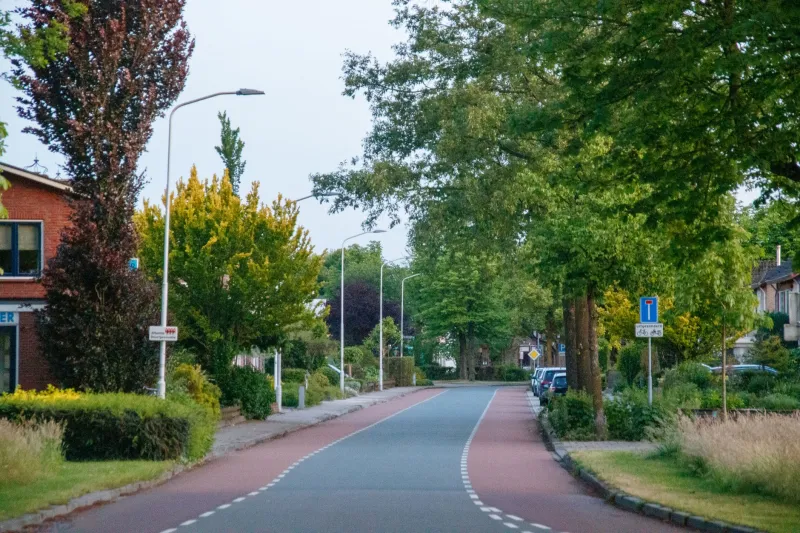
American suburbs are full of small civic talismans: the fire hydrant, the mailbox cluster, the speed bump, and, above all, the neighborhood watch sign. It is usually blue, sometimes white, often bolted to a lamppost at the entrance to a development. It shows a stylized eye or a shield and a sentence that begins, 'We report suspicious activity.' In daylight it is municipal furniture. After dark it becomes something else: a boundary marker between the lit street and the unlit field, a public promise that someone is watching, a plaque that may be less a deterrent than an invitation.
The Talisman at the Property Line
Folklorists call objects like this apotropaic: things meant to turn danger aside. The horseshoe over the door, the St. Christopher medal on the dashboard, the bundle of herbs above the threshold. The neighborhood watch sign belongs to that family, even if its makers would reject the comparison. It is a charm against the unknown, but it is also a confession that the unknown has already been noticed. A street does not post a sign unless something has happened, or unless someone fears that something will.
For the writer, that double meaning is the first gift. The sign is not neutral. It is a claim of collective vigilance, and every claim of vigilance implies a threat. When you place the sign in a story or a poem, decide what it is warding off. Then decide who knows the truth about that threat. The sign itself does not need to be supernatural to be Gothic.
The Eye That Has No Point of View
Though the sign is inanimate, it can function as a focalizer. It has no consciousness, but it has a face, and characters will read that face according to their own fears. A child sees a blue shield and thinks of a superhero. A woman who has recently been followed sees an accusation. A man with a body in the trunk sees a witness. A newcomer sees a welcome, or a warning, or both.
Use the sign to filter point of view. Let two characters pass beneath it in the same paragraph and read it differently. The discrepancy does more than characterize them; it turns the sign into a test of perception. The Gothic thrives on the moment when an ordinary object stops being ordinary because someone has looked at it too long.
Physical Details as Evidence
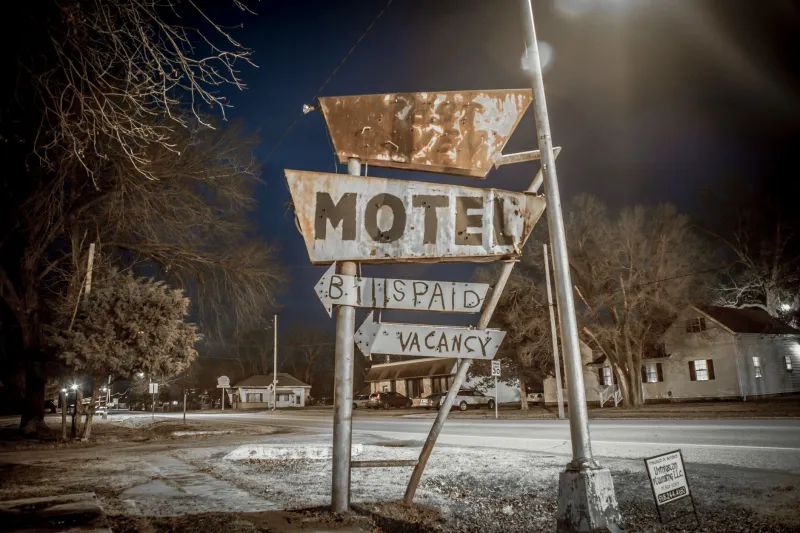
The sign becomes a witness with a history when you give it specific wear. Faded vinyl. Sun-bleached lettering. Rusted bolts. A phone number updated with a sticker that has begun to peel. A bullet hole through the shield. A sticker placed over the eye. Ivy half-swallowing the lower corner. Graffiti that has been scrubbed away but not quite.
These details are not decoration. They are evidence of use, neglect, and response. A sign that has been repaired suggests a neighborhood that still believes in its own promise. A sign that has been defaced suggests a neighborhood that has stopped believing, or one that has begun to argue with itself. A sign that has been removed and then replaced, slightly crooked, suggests something worse: a decision made twice.
Surveillance Without Technology
In 2026, the neighborhood watch sign coexists with doorbell cameras, apps, and license-plate readers, yet it remains. It persists because its power is not functional but symbolic. The sign says 'we,' but the reader must ask who 'we' is. The watchers may be retired neighbors with flashlights, or a homeowners association, or no one at all. The sign can outlive the watch it announced.
That persistence is useful. A relic of analog trust can be more unsettling than a working camera. The camera records; the sign only promises. A promise that has gone unkept is a ghost story waiting to be told.
Letting the Talisman Fail
The Gothic turn comes when the charm does not work. The sign promises watchfulness; the story reveals neglect. The sign marks a boundary; the story shows something crossing it. The sign says 'we report suspicious activity'; the story asks what happens when the suspicious activity is the reporting itself.
Avoid making the sign too obviously evil. If it glows red or speaks in a whisper, it becomes kitsch. Let it be ordinary first. Let it be slightly too still. Let the reader notice it before the character does. The blue shield can hold more dread than any monster if you trust the ordinary street to do the haunting.
A useful exercise: write a scene in which the sign is the only witness to a crime, and no one thinks to ask it. Then write a poem from the sign's perspective without whimsy, as if the sign were a stone that has been asked to keep a secret. Finally, rewrite a block party scene in which the sign has been freshly painted, and let the freshness be the most frightening detail on the page.