The Hum Beneath the Hangers: Writing the All-Night Laundromat as a Reliquary of the Missing
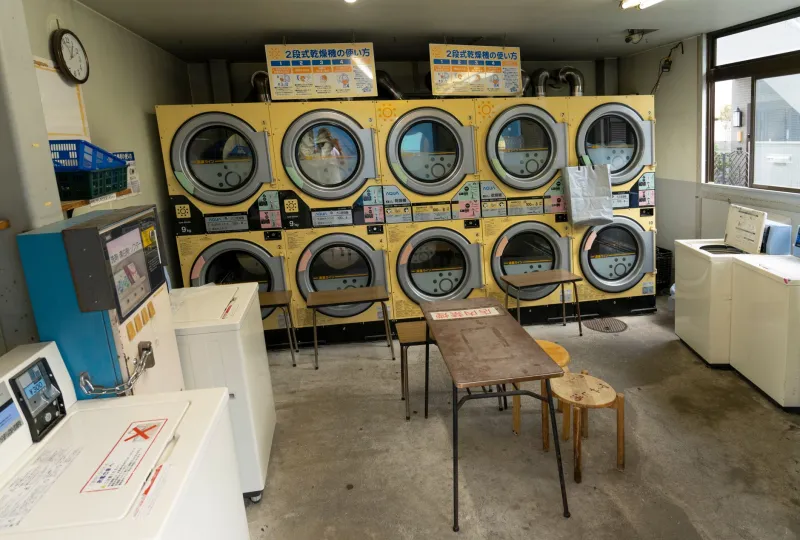
At 2:47 a.m., a laundromat does not look like a business. It looks like a vigil. The parking lot is empty except for one car with its headlights off. The strip-mall sign buzzes above the sidewalk. Inside, a row of top-loading machines stands at attention beneath fluorescent tubes, and the only sound is the slow percussion of a dryer turning a load that no one has come back to collect. This is not the laundromat of Saturday errands and bright afternoon chatter. This is the laundromat after midnight, when the ordinary machinery of American life begins to resemble a chapel of lost things.
For writers of dark fiction and gothic poetry, the late-night laundromat offers a rare combination: intimacy without company, ritual without doctrine, and evidence of human presence without the humans themselves. It is a place where the mundane becomes liturgical. The coin slot, the folding table, the vending machine dispensing tiny boxes of detergent—each can be made to carry the weight of a quiet, persistent dread.
The Liturgy of the Coin Slot
A laundromat is built around small acts of surrender. You feed quarters into a metal mouth. You choose a cycle. You wait while the machine decides what to do with your clothes. The transaction is simple, but the choreography is ancient: offering, petition, waiting, release. In fiction, this rhythm can be used to establish a setting that feels less like a service and more like a ceremony.
Craft note: resist the temptation to make the laundromat overtly supernatural too early. Let the ritual do its work first. Describe the weight of the quarters in the palm, the dry click of the coin return, the way the soap dispenser accepts bills but never gives change. A story that begins with a ghost in the dryer is a ghost story. A story that begins with a woman counting quarters at 3 a.m. because she cannot go home is something stranger and harder to shake.
The laundromat also asks characters to relinquish control. They load the machine, but they cannot see inside once the door closes. They sit and listen. They wait for the buzzer. In horror, waiting is a form of exposure. The longer a character sits beneath those lights, the more the room seems to study them.
Fluorescence and the Confessional Mirror
Late-night laundromats are lit by fluorescent tubes that flatten color and sharpen shadow. Skin looks slightly wrong under that light. Eyes appear deeper. A folded shirt on a plastic chair can resemble a slumped figure until the narrator looks twice. This is useful dread: not the monster in the corner, but the brief certainty that the corner has changed.
Mirrors are equally important. Many laundromats use mirrored windows or wall-mounted panels so that customers can watch the street or the room behind them. At night, these surfaces become confessional. They reflect the narrator back to themselves without offering absolution. They also double the room, creating a second congregation of empty chairs and half-seen movement. A character may look up from the folding table and see, in the glass, a person standing behind them. When they turn, the aisle is empty. The mirror has not lied; it has simply shown what the room contains when no one is looking directly at it.
Craft note: use reflection to complicate solitude. A laundromat at night is never truly empty if the windows are mirrored. The narrator is alone, but the glass keeps company. That company need not be hostile. It need only be attentive.
The Congregation of Unclaimed Cloth
The laundromat is full of garments that have been separated from their owners. A single sock on the floor. A child’s T-shirt left on top of a dryer. A towel draped over a folding table like a shroud. These objects are not merely props; they are relics. They carry the shape of a body, the smell of a house, the evidence of a life that was interrupted. A lone sock is a relic without a saint.
This is where the laundromat becomes a chapel of lost things. The lost items are not grand. They are not heirlooms or artifacts. They are the debris of ordinary American life: a work uniform, a gym shirt, a pair of underwear, a dish towel printed with a faded July Fourth flag. Their smallness is what makes them unsettling. The reader understands that someone left them behind, and the question is not whether they will return but why they did not.
Story prompt: Write a scene in which a character finds a garment in a laundromat that they recognize but cannot possibly own. The recognition should be sensory before it is intellectual—a familiar detergent smell, a torn hem, a name written in marker on the collar. Do not explain the connection. Let the character carry the garment home and wash it anyway.
Gothic poetry prompt: Address a single sock as if it were a saint’s relic. Use the language of veneration, but keep the setting concrete: the coin slot, the plastic chair, the lint trap. Let the poem ask what it means to be left behind in a room that never closes.
Mechanical Hum as Choir
The sound of a laundromat at night is not silence. It is a low, continuous hum, punctuated by the slosh of water, the clank of a machine shifting cycles, and the occasional buzzer that sounds like an alarm in another language. The spin cycle is especially useful. It is not a climax but a recitation—a repeated motion that empties and fills, empties and fills. A writer can use that rhythm to structure a scene, letting the prose accelerate and slow with the machines.
Craft note: describe sound in terms of the body. The hum can be felt in the teeth. The buzzer can tighten the jaw. The dryer can make the floor vibrate beneath the narrator’s shoes. When the machines stop, the silence should feel like a held breath rather than an ending. The absence of the hum is the moment the room becomes aware of itself.
The Double Congregation at the Glass
The mirrored windows of a late-night laundromat create a threshold that is both transparent and reflective. From inside, the street is visible, but so is the interior. From outside, the room appears to be full of people who are not there. A passerby may see a woman folding laundry and then realize that the woman is only a reflection of the narrator. Or the narrator may see a figure in the glass who is not reflected anywhere else in the room.
This is the laundromat’s deepest horror: it makes the boundary between inside and outside feel provisional. The door is unlocked. The sign says OPEN 24 HOURS. Anyone could enter. But the glass keeps the street at a distance, and the hum keeps the silence at bay. The character is not trapped, exactly. They are simply unable to leave without breaking the ritual.
Story prompt: Set a scene entirely within a laundromat at 3 a.m. The narrator is waiting for a load to finish. A stranger enters, puts clothes in a machine, and sits down without speaking. Use only the machines, the mirrors, and the stranger’s reflection to build tension. The stranger must never speak. The narrator must never see the stranger’s face directly.
Craft Notes for the Dark Fiction Writer
- Let the setting be useful before it is haunted. Show the character’s reason for being there—a broken dryer at home, a night shift, a fight with a partner, a move across town. The mundane motive anchors the dread.
- Use the coin slot as a measure of time. Count the quarters. Count the minutes. Count the cycles. Repetition can create unease without supernatural intervention.
- Treat lost clothing as evidence. A forgotten garment should raise a question the story does not answer: Who left it? Why? What were they wearing when they walked out? The reader will supply the fear.
- Keep the lights on. Fluorescent light is less frightening than darkness because it shows too much. Use it to reveal small wrongnesses: a stain that looks like a handprint, a shadow that does not match its object, a reflection that lags a half-second behind.
A Closing Note on the Chapel
The all-night laundromat does not need a ghost to be haunted. It is already a room where people wait, where objects are abandoned, and where the machinery of ordinary life continues without witness. To write it well, the dark fiction writer should resist spectacle and trust the hum. The chapel of lost things is not a place of grand revelation. It is a place where a single sock on the floor can feel like a confession, and the spin cycle can sound like a prayer that no one came back to finish.