Chalk Dust and Floodlight: The After-Hours Ballfield as a Stage for Quiet Dread
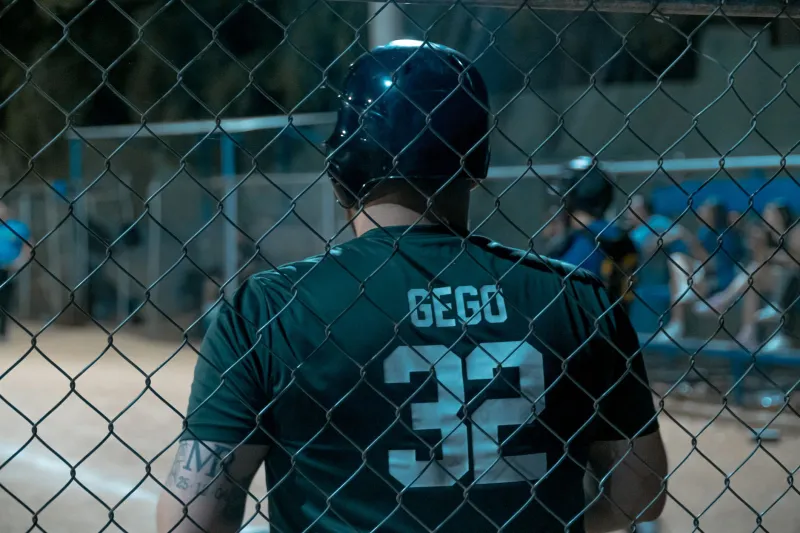
The Field After the Last Out
Every small-town ballfield has a second life. The first belongs to Saturdays and weeknights, to aluminum bats, cooler jugs, parents in folding chairs, and the bright arithmetic of scorekeeping. The second life begins once the last car pulls out of the gravel lot. The chain-link still ticks in the wind. The chalk lines remain, though already fading. A discarded batting glove sits on a bench as if its owner has only stepped away. This is the hour when the ordinary American ballfield becomes an unlikely stage for quiet dread, and it is a stage that horror writers should study closely.
The appeal is not nostalgia alone. Nostalgia is warm, and the empty field is not. The appeal lies in contradiction: a place designed for noise and community becomes, in absence, a place of intimacy and surveillance. The bases are still where they were, but no one is running them. The scoreboard may still glow, or may have gone dark mid-inning. The outfield grass is not wilderness, but it is no longer fully domestic. It is a threshold, and thresholds are where dark fiction does its best work.
A Geography of Almost
Little-league fields are useful because they are almost private. They sit at the edge of town, behind schools, beside fairgrounds, or in parks that close at dusk. They are maintained but not guarded. They belong to everyone and therefore, after hours, to no one. The writer can exploit this ambiguity by refusing to decide whether the field is safe or unsafe. The horror does not need to announce itself. It can begin as a mild administrative wrongness: a gate that should be locked, a light that should be off, a sprinkler that should not be running.
In practical craft terms, the field offers a ready-made map. Home plate, the pitcher's mound, the three bases, the foul lines, the dugouts, the concession stand, the equipment shed, the parking lot. Each is a station in a ritual that has been interrupted. The writer can move a character through these stations with the deliberate pacing of a ghost story, allowing each familiar object to become slightly less familiar. The mound is a small hill with no king. The batter's box is a rectangle of dust prepared for no one. The outfield fence is a boundary that keeps nothing out.
Chalk, Dust, and the Script That Erases Itself
Chalk is perhaps the most potent image on the field. It marks the limits of play, the difference between fair and foul, and it does so temporarily. Rain erases it. Cleats scuff it. By morning it may be gone. For the horror writer, chalk is a script written for the day and abandoned to the night. A character who follows a foul line into the dark is following a rule that no longer applies.
Use chalk sparingly. A single footprint inside the batter's box, when no one has played for hours, is more unsettling than a dozen spectral players. A line that stops abruptly, as if the field itself has refused to continue, can suggest an event that has been edited out of the evening. The dust of the infield is similarly useful. It holds impressions. It drifts. It makes a sound underfoot that is softer than gravel and more intimate than concrete. Writers should think of chalk and dust as evidence of recent human presence, not as decoration.
The Dugout as Confessional
The dugout is the field's most underrated architectural space. It is open to the field yet shadowed. It holds gear, water bottles, sunflower-seed shells, and the residue of nervous conversation. After hours, it becomes a place of discarded identity. A helmet left on a bench. A catcher's mask hanging from a hook. A cooler sweating in the dark. These objects imply absence without explaining it.
Resist the urge to populate the dugout with a monster. Let the dugout hold instead a single wrong detail: a glove that is warm, a water bottle that is full when it should be empty, a name written in chalk on the wall that no one remembers writing. The goal is not to answer the question of what happened after the game. The goal is to make the reader feel that something is still happening, quietly, in the space between the benches.
Floodlights, Insects, and the Hum of Expectation
Floodlights are the field's nervous system. They turn night into a bounded day, and when they fail, they fail dramatically. But the more effective horror often comes from a light that stays on, humming, illuminating empty grass. The hum itself is a kind of presence. It is mechanical and indifferent, yet it sounds like anticipation. The insects gather around it. The moths beat against the glass. The light does not care.
A writer can use floodlights to control revelation. Let the character see the field in pieces: first the infield, then the fence, then a figure at the edge of the light. Do not show everything at once. The blue hour, that period after sunset when the sky retains color but the ground loses detail, is especially useful. It is not yet night, but it is no longer day. The field is still visible, but its colors are wrong. The grass looks gray. The chalk looks blue. The chain-link looks like a drawing of itself.
Craft Techniques for the Empty Diamond
First, establish the field's normal life before you empty it. A single sentence about the last game, the final score, or the parents folding their chairs gives the silence something to push against. Second, use infrastructure as character. The sprinkler, the scoreboard, the concession stand, and the equipment shed are not background; they are witnesses with limited vocabularies. Third, keep the supernatural offstage for as long as possible. An empty field is already uncanny. Let the reader do the work of imagining what has stepped out of the trees beyond the outfield fence.
Fourth, avoid gore and jump scares. The ballfield is a place of rules, and horror works best when the rules are bent rather than broken. A base that is slightly out of position. A foul line that curves when it should be straight. A scoreboard that shows an inning no one played. These are quiet violations, and they linger. Fifth, end before explanation. The moment the writer explains why the field is haunted, the field becomes a location rather than a threshold. The reader should leave the story with the sense that the field is still there, still waiting for the next game, and still not entirely empty.
The Blue Hour as Threshold
The little-league field is not an obvious horror setting, which is precisely why it works. It is American, communal, and ordinary. It is also, after the last out, a place of fading chalk and humming lights, of dugouts that hold abandoned gear and grass that seems to listen. Writers who approach it with restraint will find that dread does not require a monster in the outfield. It requires only the suggestion that the game is not quite over, and that the field has not yet decided who is allowed to leave.