Postmarked to the Other Side: The Craft of Correspondence with the Dead
In the Gothic imagination, a letter is rarely mere paper. It is a threshold, a folded room, a private voice made portable. When that letter is addressed to the dead, the familiar act of correspondence becomes an act of trespass. The writer speaks into a silence that cannot be corrected, and the reader is invited to stand at the edge of that silence and listen.
This tradition persists in American fiction because it suits the national Gothic so well. The country has long been haunted by absence: the emptied farmhouse, the abandoned mill town, the family story with a missing branch. A letter to the departed gives that absence a shape and an address. It also gives writers a form that is unusually intimate, unusually patient, and unusually capable of dread.
The Envelope as Threshold
A letter to the living anticipates a reply. A letter to the dead anticipates nothing, which is precisely its power. The form creates suspense not through action but through expectation. Will anyone answer? Has someone already answered? The envelope becomes a doorway that the story may open or refuse to open.
In American horror, these letters tend to surface in charged domestic spaces: the attic box, the cedar chest, the desk drawer swollen with damp, the bundle tied in ribbon and buried beneath tax records. They are also slipped under doors, left in mailboxes, tucked into hymnals, or pressed between the pages of a borrowed book. Each location matters. The attic suggests inheritance and concealment; the under-door letter suggests an intruder who is already inside the house's routine. The writer should choose the place of discovery with the same care as the address itself.
Why the Dead Make Ideal Correspondents
The dead are silent, patient, and absolute. They cannot interrupt, correct, or clarify. That silence is a blank page on which the living may project guilt, desire, accusation, or love. Epistolary horror exploits this blankness. Unlike a diary, which is written for the self, a letter is written for another. Unlike a confession, it presumes a reader. The form therefore creates immediate dramatic irony: the reader knows the recipient may be dead, while the letter writer may not, or may know and write anyway.
The dead also make ideal correspondents because they are beyond obligation. A letter to the living creates social debt. A letter to the dead creates only atmosphere. The writer can be formal or reckless, tender or cruel, without consequence. That freedom is unsettling. It suggests that the dead are not merely recipients but witnesses, and that the act of writing may be a kind of summoning.
The American Attic and the Unsent Letter
American fiction has a particular affection for the unsent letter. The colonial conscience, the frontier absence, the suburban secret, and the family migration all leave paper behind. A letter that was never mailed is a ghost that never arrived. It waits in a Massachusetts farmhouse, an Ohio storage unit, a Louisiana desk warped by humidity. It is a message stranded between intention and delivery.
Writers can use regional detail to make this stranded quality specific. A postmark from a town that no longer exists. A stamp whose price dates the letter to a decade the family refuses to discuss. A return address written in a hand that the protagonist recognizes but cannot place. The unsent letter should feel less like a clue than like a residue. It should carry the smell of the place that kept it.
Craft Notes: Address, Withhold, Delay
Begin with concrete address. The recipient's name, the relationship, the date, and the physical letter itself should be established early. Specificity creates intimacy, and intimacy creates dread. A letter to 'the one who watches from the hall' is less frightening than a letter to 'Aunt Marion, who died in the east bedroom in 1978.'
Withhold reply. The form loses power if the dead answer too quickly. Let the absence of response do its work. Let the protagonist write again. Let the second letter reveal what the first concealed. The accumulation of unanswered correspondence is one of the form's most reliable engines.
Delay revelation. A letter within a letter, a paragraph crossed out but still legible, a date that contradicts the family story: these are quiet devices. They do not need to be supernatural to unsettle. The most effective epistolary horror often suggests that the living have been corresponding with the dead for longer than they admit.
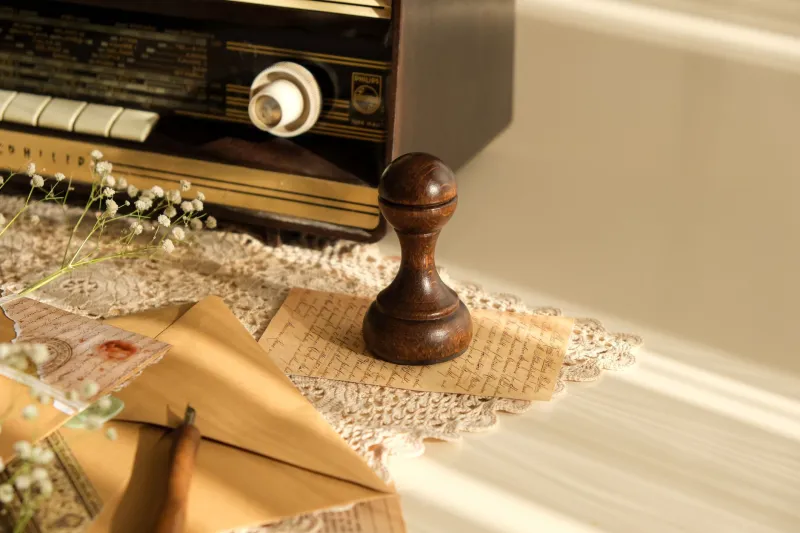
Use material detail. Ink, paper, fold, postmark, water stain, handwriting that changes under stress. The physical letter should behave like an object in the story, not a transparent vessel for information. It should be touched, hidden, burned, or read aloud. It should leave a mark on the hands.
The Ethics of the Unsent
Writing to the dead can be a grief ritual as much as a literary device. In fiction, this demands restraint. The form should not exploit the bereaved for atmosphere alone. The most durable stories acknowledge the impropriety of the act: the living are speaking where they were not invited, and the dead are being made to listen. That impropriety is the source of the form's quiet dread.
A letter to the departed is not a conversation. It is a performance of hope in the presence of silence. Writers who approach it with formal care, material specificity, and a willingness to let the blank space remain blank will find that the form still does what it has always done. It turns paper into a threshold, and it asks the reader to stand there, listening for a reply that may never come.