Paper That Bleeds: Why the Found Document Still Terrifies Us
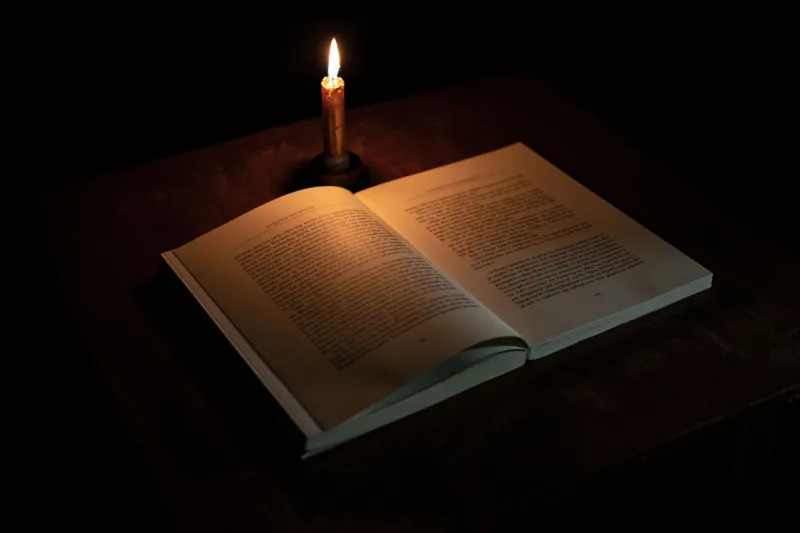
There is a particular shiver reserved for the document that should not exist. Not a story, we tell ourselves — a record. A logbook recovered from a lighthouse on a spit of Maine granite. A coroner's report filed in 1911 and never explained. A page torn from an asylum ledger, the ink still dark, the last entry unfinished.
We know, of course, that someone made it up. That is the elegant cruelty of the form: the found document asks us to disbelieve what we know in order to believe what we fear.
The Oldest Lie in the Book
American horror has always had a weakness for paperwork. Before the novel ever claimed the genre, pamphlets and sermons trafficked in alleged fact — accounts of possession in Salem, affidavits of spectral evidence. The Puritans, bless their grim hearts, invented the American found document by filing horror as legal record.
The tradition matured in the pulps and perfected itself in the epistolary works that followed: journals, letters, transcripts. What unites them is a shared pretense of witness. The document claims it was not written to entertain you. It was written by someone with something to lose.
Why Forgery Works: The Texture of Evidence
A fabricated document fails the moment it reads like fiction. Real records are boring in precise, particular ways. They contain redundancy. They contain clerical tedium — tide tables, supply requisitions, weather noted in shorthand. The horror lives in the seams, in the small deviations from routine that a keeper would only note because they disturbed him.
Consider the mechanics that give a false document its weight:
- Institutional rhythm. Real logs follow format with mechanical obedience. Deviations from that format — a missing date, a line of handwriting that breaks the grid — land like a scream in a library.
- The unsaid. Authentic records assume context the reader lacks. A keeper writes "the smell again" and explains nothing, because he was explaining it to himself.
- Material failure. The document should feel damaged by time or by something worse: water stains, an entry begun and abandoned, ink that thins as though the writer's hand grew cold.
- A termination point. The most powerful found documents do not conclude. They stop. The final entry should raise more questions than the first.
The Contemporary Keepers of the Form
A generation of American writers has carried the tradition into new territory, trading the leather-bound journal for formats that feel even more credible to modern readers. Incident reports. 911 transcripts. Deposition transcripts with redaction bars like black teeth. The digital age has not killed the found document; it has multiplied its disguises.
What the best of these writers understand is that the document is a character. It has a voice, a blind spot, an agenda. The lighthouse keeper does not know he is in a horror story — and that ignorance, preserved on the page, is the engine of dread. The moment the narrator starts writing for the reader, the forgery collapses into fiction and the spell breaks.
Craft Notes: Making a Document Feel Damned
For writers attempting the form, a few disciplines prove reliable:
- Write the boring parts first. Draft two pages of authentic-feeling routine before anything goes wrong. The reader must trust your record-keeper before they will follow him into the dark.
- Choose a format you can commit to. A ship's log has grammar and conventions; learn them. A half-researched document reads like a costume with the tag still hanging off it.
- Let the horror enter sideways. The scariest deviation from a log's routine is rarely the monster. It is a change in the writer — shorter entries, a hand that stops describing the weather.
- Give the document a history. Who found it? Who archived it, lost it, feared it? Even a one-line editorial framing note — a fictional archivist's stamp, a library accession number — deepens the illusion of provenance.
- End before you want to. Resist the urge to explain. The unfinished entry is the form's signature; readers complete the horror themselves, and what they imagine is always worse.
The Contract of the False Record
Ultimately, the found document is a bargain between writer and reader. The reader agrees to pretend, for a while, that the page in their hands is evidence. The writer agrees to honor that pretense with total craft — no winks, no shortcuts, no moments where the mask slips.
When it works, something strange happens. We close the book and look at the clock. We check the lock twice. Because the dark, the document insisted all along, was never fiction. It was simply waiting for someone to write it down.