Whispers in the Wire: How Audio Horror Rekindled America's Oldest Fire
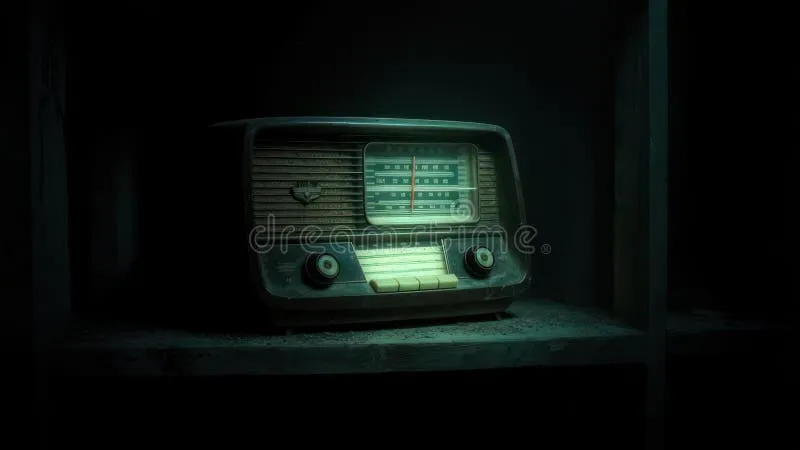
Photo: vintage radio glowing in dark room at night, via thumbs.dreamstime.com
There is a reason the oldest ghost stories were never written down. A voice in the dark is the original horror technology — older than the printing press, older than the cinema, older than the word haunted itself. And in an age when American audiences carry more screens than ever, the fastest-growing corner of the macabre has no picture at all. It is whispered. It is streamed. It is, in the most literal sense, the campfire reborn.
The Fire We Lost, the Voice We Kept
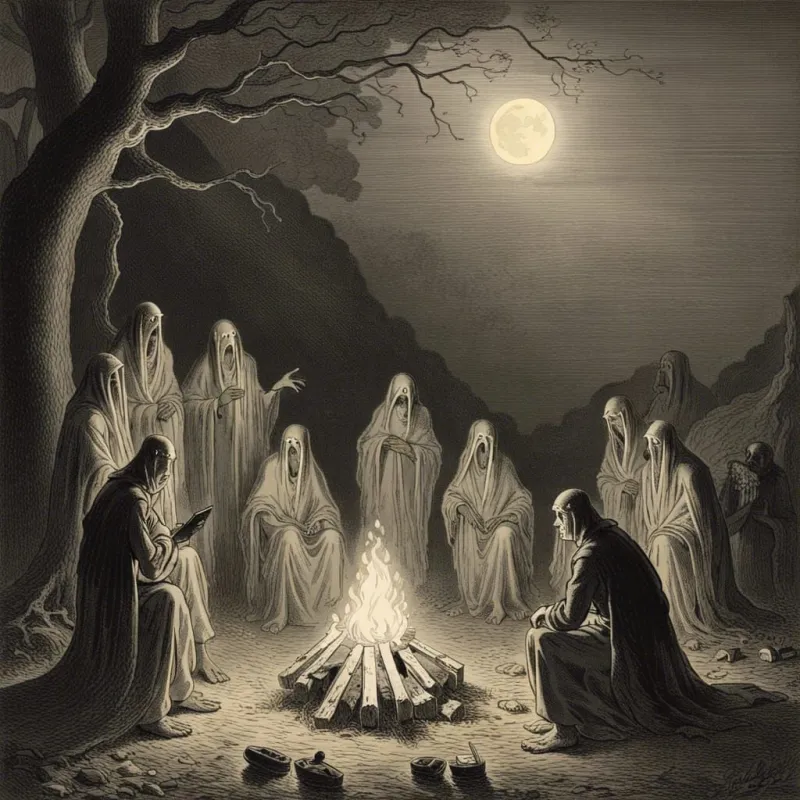
Consider what the campfire actually was: a circle of light, a ring of faces, and a darkness pressing in from every side that each storyteller could shape at will. The fire did not illustrate the tale. It merely framed the telling. The listener's imagination supplied the rest — and imagination, as every horror writer knows, is a more merciless special-effects department than any studio.
When Americans moved indoors, the tradition didn't die. It changed outlets. In the 1930s and '40s, families gathered not around flames but around radio cabinets, and programs like Lights Out — famously instructed to turn off the lights for full effect — proved that a voice, a footstep, and a well-timed silence could empty a living room faster than any monster on film. The medium's genius was its incompleteness. The audience's mind drew the creature, and the mind never draws it gently.
Television, with its relentless literalism, nearly killed that art. What you can see, you can dismiss. What you must imagine, you cannot unhear.
The Earbud Is the New Campfire Circle
The horror podcast revival is not a novelty; it is a restoration. Anthologies and audio-fiction serials have rebuilt the old contract between teller and listener, one set of ears at a time. The commuter on a night train, the insomniac in a darkened bedroom, the delivery driver crossing an empty stretch of interstate at midnight — each is alone, each is in shadow, and each has chosen to invite a voice into that shadow.
This is the crucial difference between audio horror and its visual cousins. The screen says look here. The whisper says listen closer — and listening is an act of surrender. Binaural recording, intimate narration, and long stretches of engineered quiet place the storyteller closer to the listener's ear than any campfire ever managed. The modern medium hasn't shrunk the circle of firelight. It has collapsed it to a single point: one voice, one listener, one darkness shared between them.
Silence Is the Special Effect
For writers and producers working in the form, the craft lesson is worth stating plainly: in audio horror, the pause is the blade. A creaking floorboard means nothing until it stops. A breath held for three full seconds does more work than a scream. The best audio fiction spends its budget on absence — rooms with no sound in them, roads with no wind, a narrator who stops mid-sentence and lets the static finish the thought.
This is why the form rewards patience in a way streaming video rarely does. The listener cannot look away, because there is nothing to look away from. There is only the voice, and whatever it has decided not to say.
Why the Old Flame Still Burns
Some will call the horror podcast a trend, a streaming-era curiosity. The longer view suggests otherwise. The campfire never went out; it was simply rewired. Every generation of Americans has found a new wire to carry the old current — the hearth, the airwaves, the earbud — because the need underneath is constant. We want to be frightened by something we cannot see, told to us by someone we have chosen to trust, in a darkness we have willingly entered.
The fire changed shape. The shadows it casts sound exactly the same.