The Corrupted Cradle: Craft Notes on Turning Nursery Rhymes into Summoning Songs
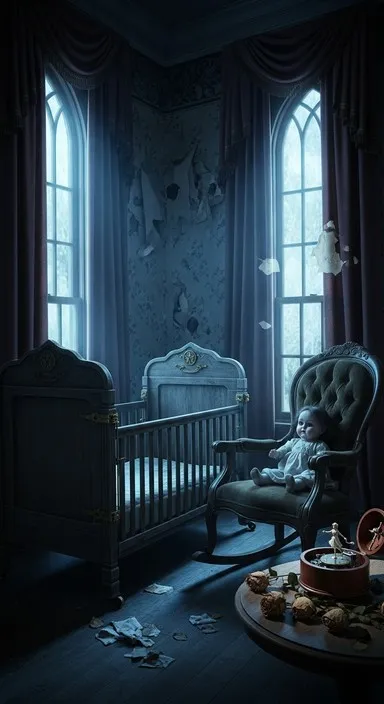
Photo: dark nursery rocking chair shadow moonlight gothic, via images.stockcake.com
There is a particular dread reserved for the moment a familiar childhood verse appears in a horror novel, set off in italics, its rhythm intact but its meaning gone rotten. The reader recognizes the cadence before they understand the words — and in that gap between recognition and comprehension, the writer has them.
Why the Nursery Rhyme Betrays Us So Easily
The lullaby is a contract. It promises safety, repetition, and an ending: the child sleeps, the song concludes. Gothic fiction thrives on broken contracts, and few forms arrive pre-loaded with more trust than the nursery rhyme. When Shirley Jackson's readers chant "one for sorrow, two for joy" alongside her characters, or when a modern novel prints a mother's humming as a string of nonsense syllables, the reader participates in the ritual whether they wish to or not.
Repetition does much of the work. "Ring Around the Rosie" circles endlessly in the popular imagination — plague, ashes, falling down — regardless of what historians say about its actual origins. The verse survives because it sounds like it should mean something terrible. That ambiguity is an asset. The writer need not invent dread; they need only aim it.
The Mechanics of the Uncanny Verse
Corrupting the familiar requires restraint. Consider three reliable techniques:
Substitute one element. Change nothing about a rhyme's structure except a single noun — the baby, the cradle, the bough — and the whole verse tilts sideways. The reader's memory does the rest of the haunting.
Interrupt the pattern. A lullaby that stops mid-line, or repeats a stanza one time too many, signals that something else is now singing. On the page, white space becomes a weapon: the gap where the verse should resolve is where the reader's imagination sets up house.
Change the singer. The most chilling nursery rhymes in recent dark fiction are attributed to voices that should not know them — a house, a doll, a child who has not yet been born. Attribution transforms a folk verse into evidence.
A Practical Exercise
Take a rhyme you learned before you could read. Write it out exactly as remembered. Then write it again from the perspective of whatever is listening. Do not explain the difference. Place both versions in a scene and let the reader discover the corruption on their own.
The strongest gothic writing in this mode — from the verse-chapters of certain Southern Gothic novels to the counting rhymes threaded through contemporary American horror — never winks at the reader. The lullaby is played straight. Only the context has changed, and the context is everything.
Silence, too, belongs in the toolkit. A rhyme the narrator refuses to finish, citing a reason they cannot name, outperforms any explicit curse. The unprinted stanza weighs more than the printed one. This is the quiet grammar of the form: what the mother will not sing is what the child will spend the novel remembering.
In the end, the nursery rhyme endures as a horror device because it is the first story most of us ever trusted. Corrupt it gently, and the reader does not merely read the dread — they hum along with it.