The Idling Congregation: How the Drive-In Taught the American Night to Wait
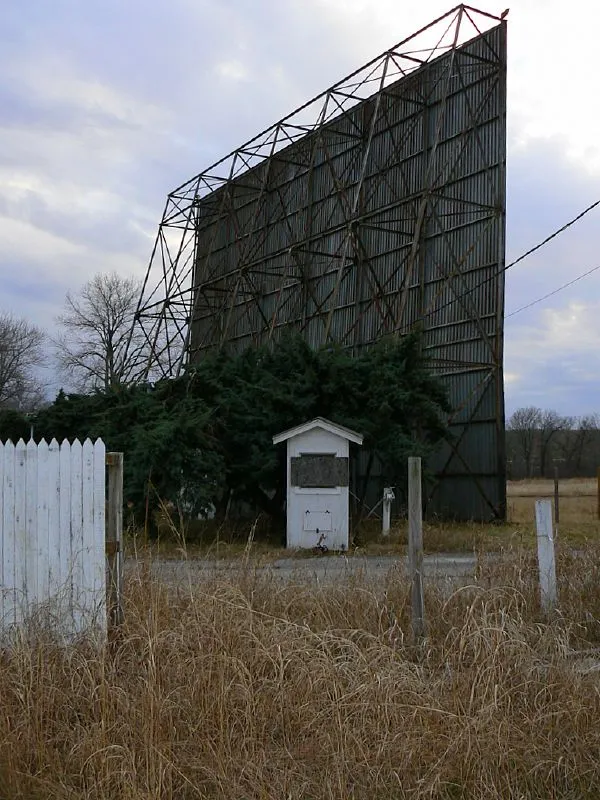
Photo: Thomas & Dianne Jones from Okmulgee, USA, CC BY 2.0, via Wikimedia Commons
The drive-in does not announce itself as a haunted place. It announces itself as a relic. A white rectangle at the edge of town, a gravel apron, a fence gone soft with rust. But stand there after the last feature has ended and the lot has emptied, and the air still holds the shape of an audience. That is the first lesson for any writer who wants to use the drive-in: the place is not abandoned. It is waiting.
The Ritual of the Windshield
A drive-in is a theater you watch from inside a machine. That single fact changes everything. The audience is not seated in rows; it is parked in a grid, each car a small private room with a windshield for a proscenium. The ritual is intimate and anonymous at once. You arrive in the dark, you tune the radio, you roll down the window if you want the speaker box, or you keep it up if you want the sound to come through the car's own speakers. Either way, you are sealed in.
For the horror writer, the windshield is a frame within a frame. It gives you two kinds of glass: the screen in front of the audience and the glass in front of the characters. What they see on the screen is public. What they see through their own windshield is private. The space between those two views is where dread lives.
The Speaker Box That Outlives Its Voice
The dead speaker box is a gift. It hangs on a post, a little metal husk with a cord that once connected a car to a movie. Now it connects nothing. Write it as an instrument that has forgotten its song. Let a character lift it, hear only the hiss of old wiring, and remember a voice that is no longer there. The box does not need to speak. Its silence is the point.
This is the difference between a set piece and a haunting. A jump scare would make the speaker box crackle with a sudden voice. A slow story lets the character wonder whether the crackle was real, and then lets the question sit through the next scene. The drive-in rewards that patience because it is already a place of waiting. Cars idle. Projectors turn. The sky does the slow work of going dark.
Writing the Blank Screen
The screen is the drive-in's central contradiction. It is enormous and empty. On a night with no feature, it is a white wall that reflects nothing but the weather. That blankness is not a void; it is an expectation. The screen still faces an audience that is not there. It still waits for light.
Use the blank screen as a character in its own right. Describe the way it catches the headlights of a passing car, the way it holds the shape of clouds, the way it makes the trees around it look like an audience. Do not fill it too soon. The longer you leave it white, the more the reader will fill it with their own fear.
Windows Rolled Up, Confession Kept
The drive-in is a confessional with the windows rolled up. People say things in cars they would never say in a pew. The dark, the enclosure, the forward-facing silence — all of it invites honesty. A character can admit a secret to the windshield. The windshield will not absolve them.
This is where the drive-in becomes useful for more than atmosphere. Put two characters in a car at a dead drive-in. Give them a screen they cannot see and a speaker box that does not work. Let them talk. The place will do the rest. The gravel will crunch under someone else's tires. The fence will hold the dark at bay. The screen will stay white.
A Double Feature of Nostalgia and Dread
The drive-in is American because it is both a memory and a ruin. It belongs to the postwar boom, to families in station wagons, to double features and mosquito coils and the smell of popcorn in the back seat. It also belongs to the long decline, to the lots that closed, to the screens that went dark. When you write it, you are writing both at once. Nostalgia and dread are the double feature.
The trick is not to choose between them. Let the memory be warm and then let it curdle. Let the character remember a good night at the drive-in and then notice that the car next to them has been idling for an hour with no one in the driver's seat. Do not explain. The screen is still white. The speaker box is still dead. The night is still waiting.
That is the drive-in's lesson for writers: a place can be full of people and still be empty. A screen can be blank and still be watching. And a story can be quiet and still be the loudest thing in the dark.