The Pears That Do Not Bruise: Writing the Model Home as a Suburban Reliquary
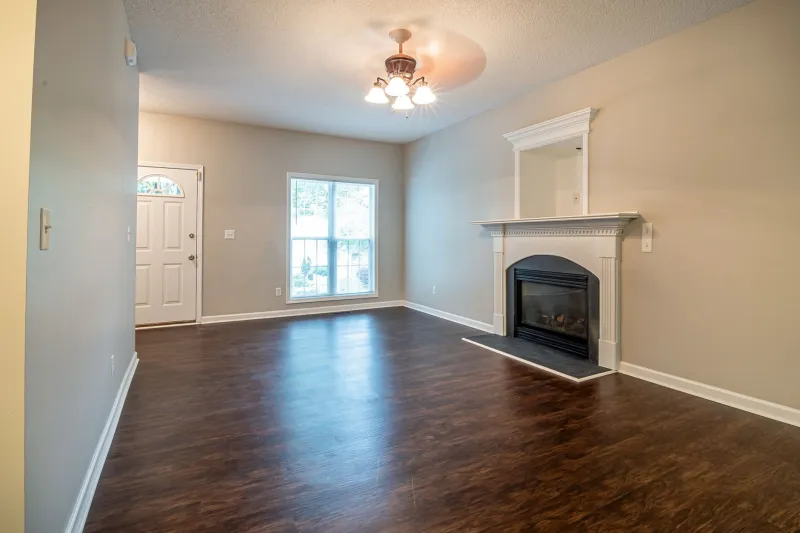
The model home is not a house. It is an argument. It argues that life can be arranged, that mess can be postponed, that the right floor plan will produce the right family. It is a sales instrument dressed as a dwelling, and for the horror writer it is one of the most useful rooms in America. The dread does not come from what is broken. It comes from what has never been allowed to break.
The Sales Office Smile
Begin with the voice. The model home has a voice, and it is cheerful in the way that fluorescent light is cheerful. The sales associate behind the counter speaks in exclamation points and financing terms. The brochure uses words like luxury and flex space and owner's suite. The language is not lying, exactly. It is describing a life that has been inspected and approved.
A writer can use that cheer as a pressure vessel. Let the prose stay polite while the details turn. The coffee in the sales office is fresh. The carpet has vacuum lines. The windows are clean enough to suggest that no one has ever pressed a face to them. The horror lives in the gap between the script and the silence behind it. Write the room as if it is waiting for a family to perform the roles it has already cast.
Fruit Without Season
The bowl of pears on the kitchen island is a small masterpiece of American staging. They are plastic, or wax, or real fruit lacquered into permanence. They do not bruise. They do not ripen. They do not attract flies. They are the still life that refuses to become a memento mori.
Use that refusal. In fiction, the object that will not decay becomes an accusation. A real pear on a real counter is a promise of time passing. A plastic pear is a promise that time has been canceled. The model home is full of such cancellations: the towels folded with tag still attached, the beds made to military smoothness, the soap that has never been wet. The writer should catalog these small abstentions from life and let them accumulate into a mood. Do not explain the dread. Let the reader notice that nothing in the house has ever been used.
The Bedroom That Has Never Slept
The staged bedroom is a particular kind of uncanny. It has a bed, but no sleeper. It has a nightstand, but no glass of water. It has a closet with three shirts arranged by color, and none of them smell like a person. The room is intimate in its design and sterile in its effect.
Here the craft move is restraint. Resist the urge to put a ghost in the bed. The empty bed is stronger. Let the character stand in the doorway and feel that the room has been prepared for someone who never arrived, or for someone who arrived and was not permitted to stay. The horror is architectural hospitality: the house welcomes you into a life that has already been lived by no one.
Towels, Tags, and the Liturgy of Newness
The model home worships newness. New grout. New paint. New carpet that smells faintly of adhesive and possibility. In the United States, that newness is tangled with class aspiration, with the mortgage, with the HOA covenant, with the belief that a fresh start can be purchased by the square foot.
A writer can make the newness liturgical. Describe the linen closet as a reliquary. Describe the powder room as a chapel of unblemished surfaces. The family touring the model home touches nothing, or touches only what the sales office permits. They leave fingerprints on the brochure, not the granite. The model home preserves the promise of domestic life by preventing domestic life from occurring inside it.
That is the mausoleum logic. A mausoleum is not a house for the dead. It is a house for the memory of the living. The model home performs the same function for the suburban future. It keeps the idea of the family safe by keeping the family out.
What the Floor Plan Forgets
Every model home has a floor plan, and every floor plan has an omission. The hallway that goes nowhere. The window that looks into the garage. The bonus room that is large enough for a life but has no purpose. These are not flaws. They are invitations to the writer.
Use the floor plan as a map of what the house cannot say. Let the character count the rooms and come up one short. Let the dimensions feel slightly wrong. Let the model home's perfection become a kind of pressure on the body: the ceilings too high, the corridors too wide, the silence too even. The suburban gothic often works through scale, through the sense that the built environment has been designed for a person who is not quite the person standing in it.
Writing the Empty House
The model home is a machine for producing dread out of aspiration. To write it well, avoid the obvious hauntings. No blood in the bathtub. No voice in the ventilation. Instead, write the pristine surface and the missing evidence of life. Write the sales office smile that does not reach the eyes. Write the pears that never rot. Write the towels that have never dried a body.
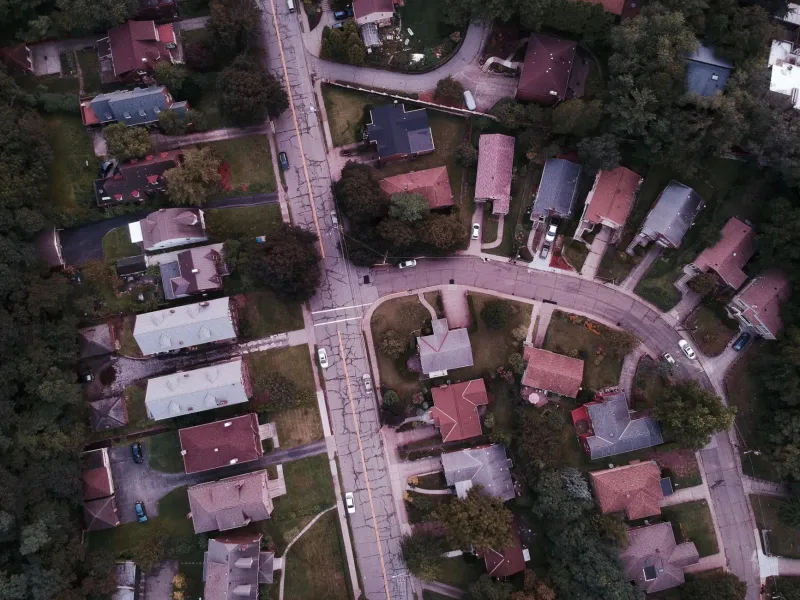
The result is not a ghost story in the traditional sense. It is a story about the fear of living inside a life that was only ever staged for someone else. For American readers, that fear has a familiar address. It is the subdivision at the edge of town, the model home at the end of the cul-de-sac, the perfect house that waits with its lights on and its beds made, ready for a family that will never quite deserve it.